The Digital/Physical Boundary
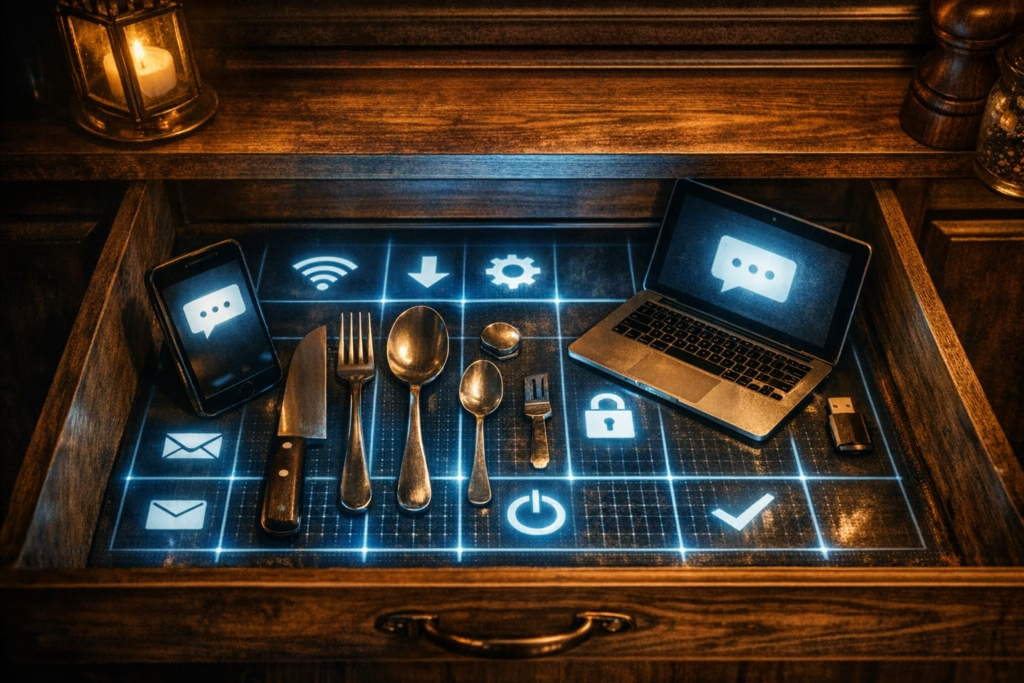
QR codes on everything, receipts that only exist in the cloud, fridges that want your Wi‑Fi password — the slow, slightly smug creep of the Internet into your cutlery drawer. The physical world used to be blissfully offline, but now every object seems convinced it needs an app, an account, or a firmware update just to perform the job it was born to do.
There was a time when the physical world minded its own business. A chair was a chair. A fridge was a fridge. A receipt was a small, crumpled tree‑fragment you found in your pocket six months later. But now the digital realm has seeped into every object with the quiet confidence of a vine that knows you’re too tired to prune it. Everything wants to connect, sync, update, authenticate, or “pair,” as if my toaster and my phone are meant to be in a committed relationship.
It starts innocently enough: a QR code on a menu, a “smart” lightbulb that insists on a firmware update, a washing machine that wants to send me push notifications about its emotional state. But then the creep begins. Suddenly the fridge refuses to chill unless it can handshake with the router. The vacuum cleaner demands a cloud account. The doorbell wants to know my location. Even my cutlery drawer feels like it’s one software patch away from asking for Bluetooth permissions.
The receipts are the worst offenders. They no longer exist in the physical plane. They ascend directly to the cloud, where they float like digital ghosts, waiting to be summoned by a tax audit or a moment of existential dread. “Your receipt is available online,” the cashier says, as if that’s a kindness. No, it’s a hostage situation. My proof of purchase is now trapped in a server farm somewhere in Utah, and I need a password I’ve already forgotten to retrieve it.
And yet, despite the absurdity, I can’t deny the strange convenience of it all. The digital and physical worlds have fused into a single, shimmering layer of semi‑reality – part appliance, part interface, part surveillance, part magic. It’s unsettling, yes, but also oddly comforting. The objects in my home may be nosy, needy, and occasionally insubordinate, but at least they’re trying. In their own glitchy way, they’re reaching out.
I open a drawer and half‑expect it to ask for my login. Honestly, I’m not sure it’s wrong to try.

Harry is a satirist in remission who now moonlights as a metaphysical desk jockey. He specialises in cosmic admin, recursive nonsense, and the occasional algorithmic incident report. One poem he wrote still hasn’t stopped, and several readers claim it whispers back during thunderstorms.

The Pikers of Egg Beta III

Paper Planes Refloat Zimbabwe Economy